Religious Observance Termination
FCA US Sued for Firing Employee Over Sabbath, Passover Observance
Background
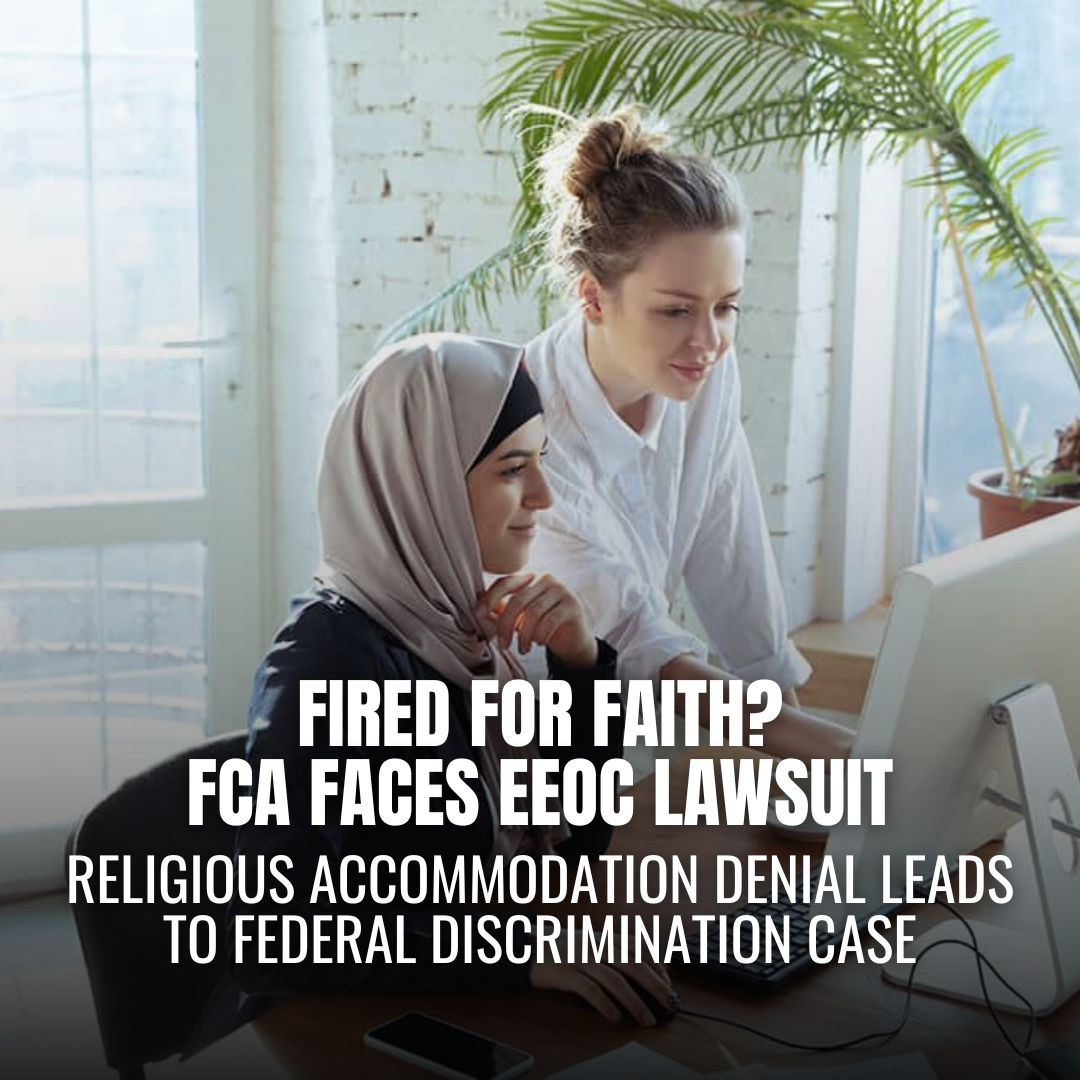
FCA US, LLC—a major automobile manufacturer known for brands like Chrysler, Dodge, Jeep, and Ram—is facing legal action from the U.S. Equal Employment Opportunity Commission (EEOC) after allegedly failing to accommodate an employee’s religious practices and later terminating him for related absences.
Incident Details
An employee at FCA initially received a religious accommodation allowing him to avoid work during the Jewish Sabbath. However, this accommodation was later revoked by FCA management. The employee subsequently secured a role with a schedule that did not conflict with his religious observance.
Two months later, FCA implemented a new policy requiring mandatory Saturday shifts, directly conflicting with the employee’s Sabbath. Despite the conflict, FCA issued attendance violations for the employee's absence on those days. The employee formally complained about the disciplinary actions, but the company continued to penalize him.
Later, the employee requested two unpaid days off to observe Passover. FCA denied the request, issued further violations for non-attendance, and ultimately terminated the employee.
Legal Background
Title VII of the Civil Rights Act of 1964 prohibits employers from discriminating against employees based on religion. It mandates that employers provide reasonable accommodations for sincerely held religious beliefs and practices unless doing so would impose an undue hardship on business operations. The law also prohibits retaliating against employees who complain about religious discrimination.
The EEOC filed suit in the U.S. District Court for the Eastern District of Michigan (Case No. 25-cv-11675) after efforts to resolve the matter through pre-litigation conciliation failed.
Settlement and Relief
As of now, the lawsuit is ongoing. The EEOC seeks back pay, compensatory damages, and punitive damages for the affected employee, along with injunctive relief to prevent similar incidents at FCA in the future.
Key Takeaways
- Employers must engage in meaningful dialogue when religious accommodations are requested.
- Disciplinary action for religious observance may violate federal law.
- Firing employees for asserting their religious rights can result in litigation and reputational harm.
Conclusion
This case highlights the critical importance of upholding religious rights in the workplace. Employers must ensure policies and scheduling practices are inclusive and compliant with Title VII. Failure to accommodate religious observances can result in serious legal consequences and damage to employee trust.