Federal Employment Laws
Military Health Contractor Settles Sexual Harassment Case for $60K
Background
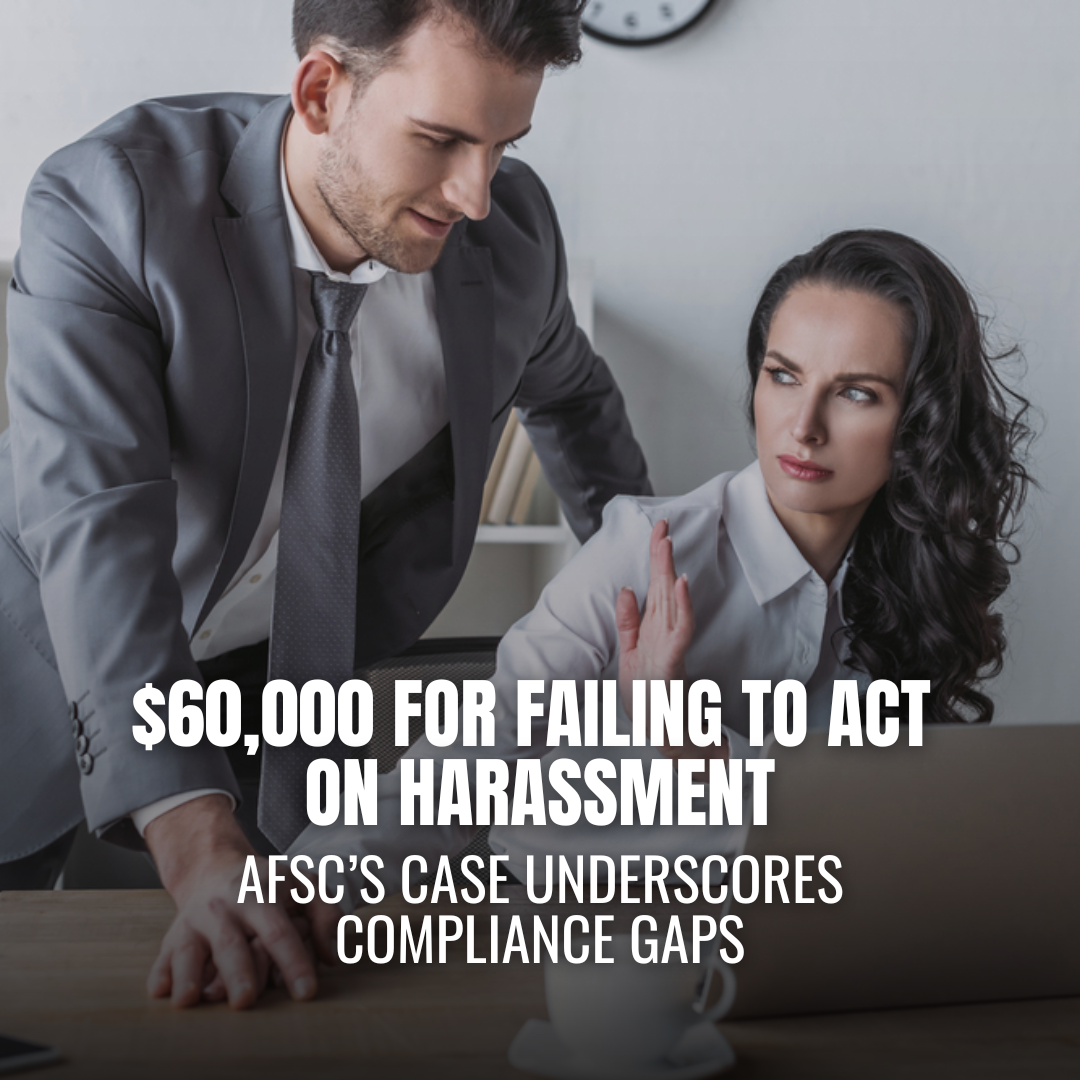
Armed Forces Services Corporation (AFSC), a Virginia-based provider of health and wellness services for military personnel, has settled a workplace sexual harassment and retaliation lawsuit for $60,000. The case was filed by the U.S. Equal Employment Opportunity Commission (EEOC) after AFSC allegedly failed to address employee complaints of misconduct occurring in 2018 at its California site.
Incident Overview
The lawsuit stemmed from an incident involving a female employee who reported verbal and physical sexual harassment by a male colleague. Despite being made aware of the misconduct, AFSC allegedly failed to take timely and effective steps to investigate and prevent further harm. The employee later experienced retaliation after filing her complaint.
The harassment reportedly persisted over time, creating a hostile work environment. The lack of immediate corrective measures by AFSC raised concerns about its internal complaint handling procedures and overall commitment to workplace safety.
Legal Background
The case was brought under Title VII of the Civil Rights Act of 1964, a federal law prohibiting employment discrimination based on sex, race, color, religion, or national origin. Title VII also protects individuals from retaliation when they report discriminatory practices or participate in related investigations or legal proceedings.
Before filing suit, the EEOC attempted to resolve the matter through its conciliation process. After those efforts failed, legal proceedings commenced in the U.S. District Court for the Southern District of California (Case No.: 3:22-cv-00999).
Settlement Terms and Relief
Under the consent decree:
- AFSC agreed to pay $60,000 in damages to the affected employee.
- The company will implement revised anti-discrimination and anti-harassment policies.
- A centralized system will be put in place for tracking internal complaints.
- AFSC is required to provide training for employees and management on preventing harassment and retaliation.
- Clear procedures must be outlined for reporting workplace misconduct.
The consent decree will be overseen by the court for a period of two years to ensure compliance and monitor progress.
Key Takeaways
- Internal complaint procedures must be clear, accessible, and actively enforced to protect employees and uphold organizational integrity.
- Retaliation discourages future reporting and undermines workplace accountability, making prevention and training essential.
- Legal action may follow inaction, especially when employers fail to take prompt steps after receiving harassment complaints.
Conclusion
This case highlights the importance of swift, transparent, and comprehensive responses to workplace harassment. Employers must actively ensure their environments are safe and inclusive. When these obligations are ignored, the consequences can be costly—not only financially, but in terms of employee trust, reputation, and regulatory scrutiny.
Be Proactive—Not Reactive
Sexual Harassment | Course Info | TAP Series®
Don’t wait for problems to escalate. TAP Series equips your team to recognize, report, and prevent harassment—before it becomes a legal risk. As a leader in online compliance training, TAP Series simplifies your path to a safer, legally compliant workplace.
Whether you're updating your current policy or starting from scratch, TAP’s structured, self-paced programs are trusted by organizations across the U.S. to deliver training that actually makes a difference.