SB 68 Allergen Disclosure Requirements
Major Changes Ahead for Allergen Disclosure in California Restaurants
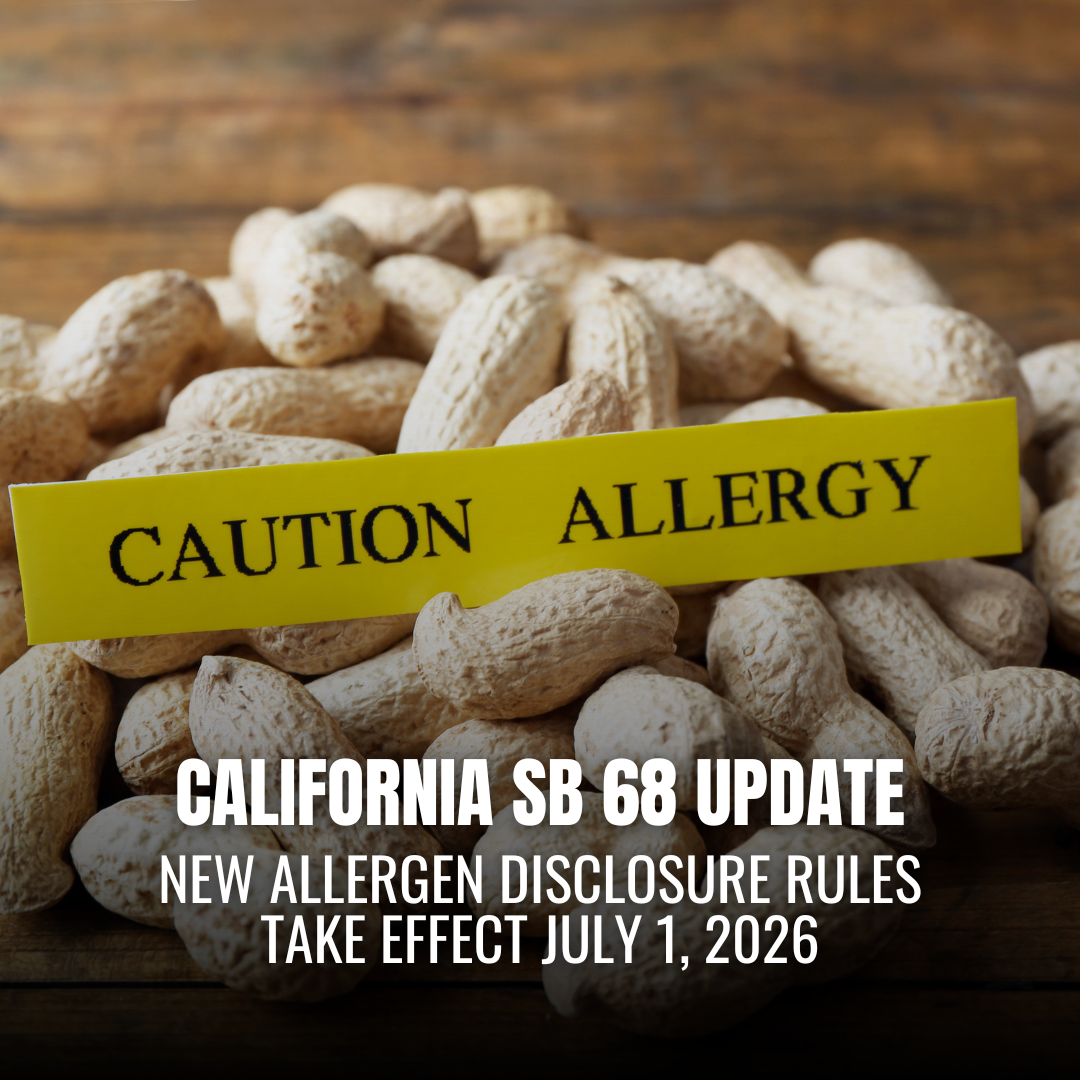
California Senate Bill 68 (SB 68), authored by Senator Menjivar, introduces important new requirements for allergen disclosure in the state’s foodservice industry. This legislation is especially relevant for restaurant owners, managers, and food safety professionals. Here's a breakdown of what the bill includes and how it impacts food businesses across California.
Sesame Officially Added as a Major Food Allergen
SB 68 adds sesame to the list of major food allergens, bringing California’s definition in line with recent federal changes. This addition reflects growing awareness of sesame as a common allergen and the need for more consistent labeling and disclosure.
New Allergen Disclosure Rules Effective July 1, 2026
Beginning July 1, 2026, restaurants and food facilities in California will be required to provide written notification to consumers about major food allergens contained in their menu items. The format and scope of these notifications will depend on the size and structure of the food facility.
Chain Restaurants (Large and Medium)
Chain restaurants must:
- Clearly list allergens contained in each menu item either directly on the menu or
- Provide this information in a digital format that is easily accessible (such as an online menu or digital signage)
Small and Independent Restaurants
Smaller establishments must:
- Make allergen information readily available and accessible to customers, but are not required to include it on the menu itself
- Examples may include a printed allergen chart or a posted notice with instructions on how to request allergen information
Exemptions
Certain operations are excluded from these new requirements:
- Compact mobile food operations
- Nonpermanent food facilities, such as temporary booths at fairs or pop-up events
Strengthening Existing Food Safety Laws
California law already mandates that food handlers and persons in charge (PICs) be trained in food allergen awareness. SB 68 builds on these rules by requiring that allergen information be made available to customers before they order. This step is intended to prevent accidental exposures and protect the growing number of consumers with food allergies.
Enforcement and Local Oversight
Under California’s Retail Food Code, violations of allergen disclosure requirements may be treated as misdemeanors. Local health agencies are responsible for enforcement. While some state mandates require reimbursement to local governments, SB 68 includes provisions that limit state reimbursement obligations in many cases.
Why It Matters
With food allergies affecting millions of Americans, including an increasing number of children, allergen transparency is essential for public health. This legislation ensures that consumers receive clear information about the food they’re eating—enabling them to make safer choices. It also helps food businesses reduce liability and improve customer trust.
Next Steps for Food Operators
Restaurants should start preparing now by:
- Reviewing ingredients for all menu items
- Updating training for food handlers and managers
- Planning how allergen disclosures will be communicated to customers
Although implementation is over a year away, proactive planning can ensure a smooth transition and full compliance with the new law.