Reasonable Accommodation Employment Law
Coca-Cola Bottling Company United Faces EEOC Disability Discrimination Lawsuit
Background
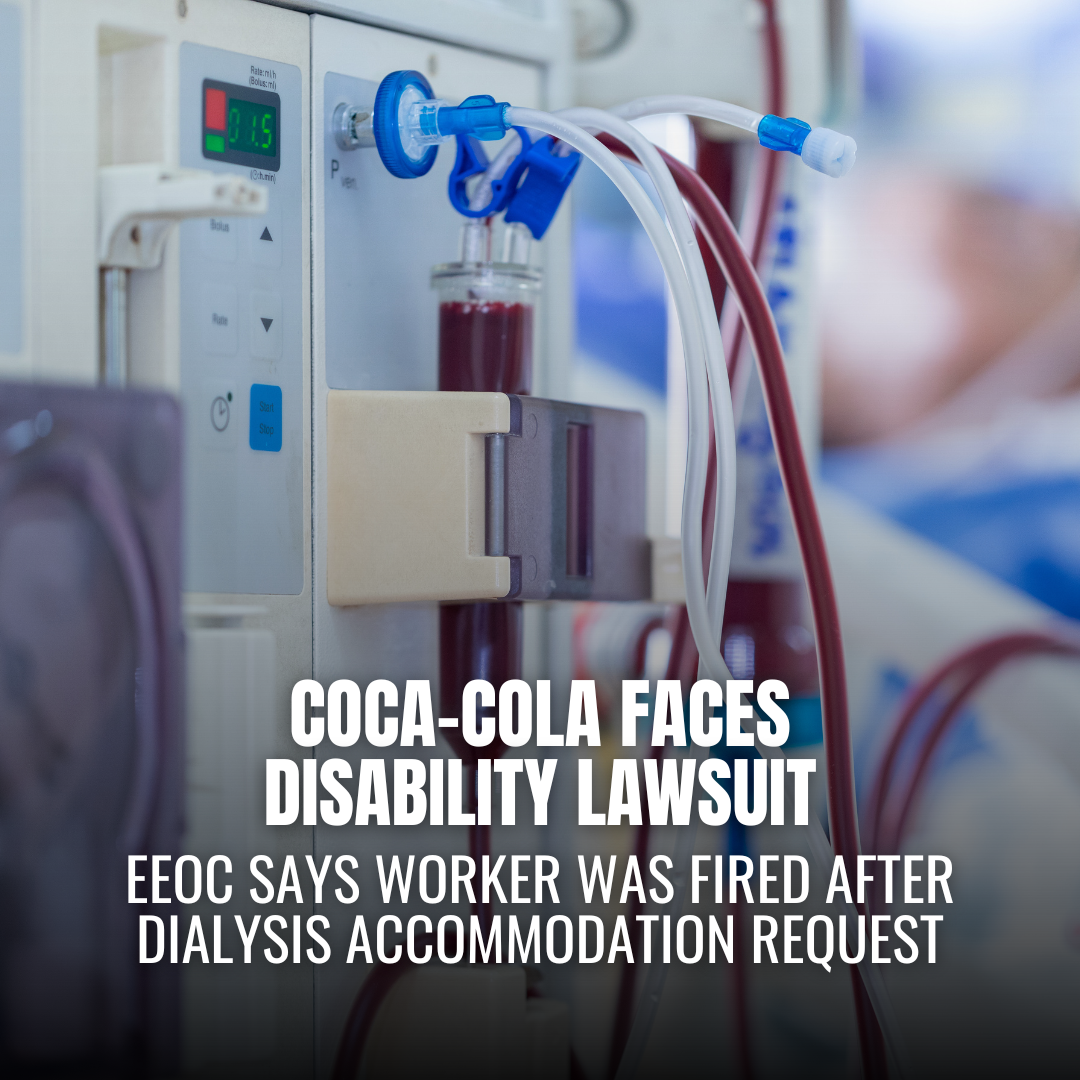
Coca-Cola Bottling Company United, Inc. (CCBCU), the third-largest Coca-Cola bottler in the United States, has been sued by the U.S. Equal Employment Opportunity Commission (EEOC) for alleged disability discrimination. The case centers on a Louisiana delivery driver who lost his job after seeking a work schedule adjustment to accommodate his dialysis treatment for renal disease.
Incident Details
The employee, based in Lafayette, Louisiana, required dialysis and requested a modified work schedule to continue both treatment and employment. Instead of accommodating the schedule adjustment, CCBCU informed the employee he would need to apply for other company positions that fit his medical restrictions.
The employee applied for a suitable position that would have allowed him to maintain dialysis treatment while working full time. Despite being qualified, he was not reassigned to the role. In August 2022, the company terminated his employment.
Legal Background
The Americans with Disabilities Act (ADA) prohibits employers from discriminating against qualified employees with disabilities. Under the ADA, employers are required to provide reasonable accommodations—such as modified schedules—unless doing so creates an undue hardship. The law also requires consideration of reassignment to vacant positions when an employee can no longer perform their current role.
The EEOC filed the lawsuit, EEOC v. Coca-Cola Bottling Company United, Case No. 2:25-cv-02032, in the U.S. District Court for the Eastern District of Louisiana after conciliation efforts failed.
Settlement and Relief
The case seeks remedies that include back pay, compensatory damages, and policy changes to ensure compliance with federal disability laws. While the final relief is pending, the EEOC typically pursues both monetary compensation for the affected employee and injunctive relief requiring companies to strengthen training and compliance measures.
Key Takeaways
- Employers must explore reasonable accommodations, including schedule adjustments, when requested by employees with disabilities.
- Reassigning employees to available vacant positions may be a lawful and necessary accommodation under the ADA.
- Failure to comply with ADA requirements can result in costly lawsuits, reputational harm, and mandated corrective measures.
Conclusion
The lawsuit against Coca-Cola Bottling Company United highlights the critical importance of ADA compliance in the workplace. Employers must carefully evaluate accommodation requests, consider reassignment options, and avoid terminating employees solely because of disability-related needs. The outcome of this case may influence how large employers handle similar accommodation requests moving forward.