Workplace Discrimination News
WorkSmart Staffing Accused of Sex Discrimination in Alabama Hiring Practices
Background
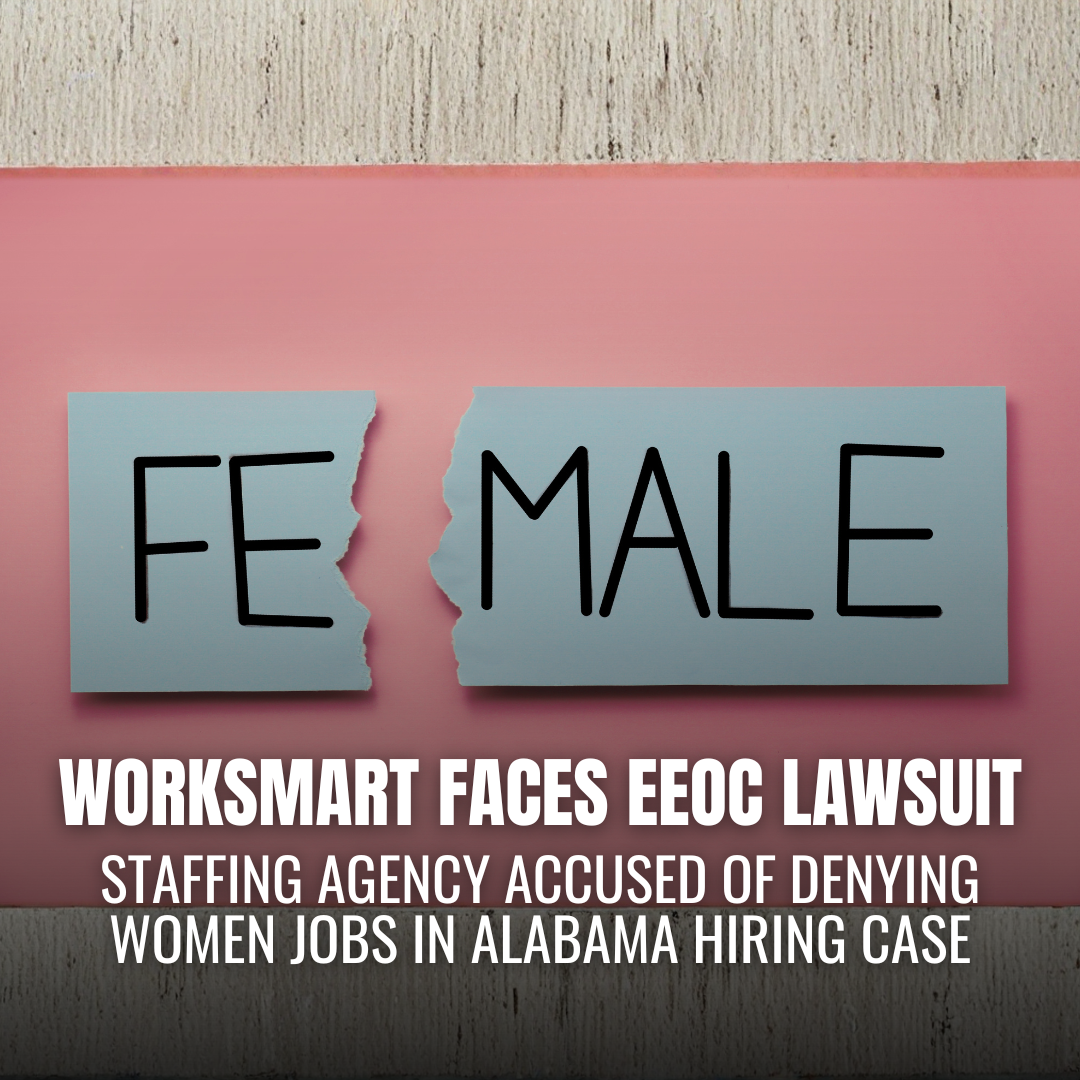
The U.S. Equal Employment Opportunity Commission (EEOC) has filed a lawsuit against WorkSmart Staffing, LLC, a regional staffing agency based in Greenville, South Carolina, for alleged sex discrimination in its Alabama offices. The case stems from claims that the company failed to hire or refer female job applicants for laborer positions between 2020 and 2023.
WorkSmart Staffing operates throughout the southeastern United States, supplying workers to a range of industrial clients. The allegations focus on two specific offices—Hoover and Leeds, Alabama—where the company allegedly engaged in hiring practices that favored male applicants.
Incident Details
According to the lawsuit, WorkSmart Staffing refused to hire or refer qualified female candidates for certain laborer positions between August 1, 2020, and August 8, 2023. The EEOC asserts that one of WorkSmart’s clients explicitly requested male workers for their facility, and instead of rejecting or reporting the discriminatory request, WorkSmart complied.
The result was that multiple women were denied the opportunity to work based solely on their gender, despite being equally capable of performing the required duties. The EEOC’s investigation found evidence that WorkSmart knowingly participated in this discriminatory hiring pattern, creating a systemic barrier for women seeking employment in these roles.
Legal Background
The lawsuit was filed under Title VII of the Civil Rights Act of 1964, a landmark federal law that prohibits employment discrimination on the basis of sex, race, color, religion, or national origin. Title VII explicitly forbids employers and staffing agencies from honoring a client’s discriminatory hiring preferences.
Employers and employment agencies are obligated to provide equal opportunity regardless of sex, even when a client requests otherwise. Violations can result in back pay, compensatory and punitive damages, and injunctive relief to prevent recurrence.
The case, EEOC v. WorkSmart Staffing, LLC (Civil Action No. 4:25-cv-01659-SGC), was filed in the U.S. District Court for the Northern District of Alabama, Middle Division, after efforts to reach a voluntary conciliation agreement failed.
Relief Sought and Settlement Efforts
The EEOC is pursuing a combination of monetary and injunctive relief for the affected female applicants. Requested remedies include:
- Back pay and front pay to compensate women for lost wages.
- Compensatory and punitive damages for emotional and financial harm.
- Injunctive relief, requiring WorkSmart to implement nondiscriminatory hiring policies, conduct training, and report compliance to the EEOC.
No settlement has been reached as of this report, and litigation remains ongoing.
Key Takeaways
- Staffing agencies share liability: Even if a client requests specific hiring preferences, agencies must comply with anti-discrimination laws and cannot enforce biased requirements.
- Title VII protections extend to applicants: Job seekers are protected from discriminatory hiring practices based on sex, even at the referral stage.
- Preventive compliance is critical: Regular policy reviews and anti-bias training can help staffing firms avoid costly legal exposure and maintain workplace equality.
Conclusion
The WorkSmart Staffing lawsuit serves as a reminder that employment agencies and their clients are both accountable under federal anti-discrimination law. Title VII’s protections apply not only to full-time employees but also to applicants seeking temporary or referred work.
As the case proceeds, it underscores the importance of compliance, transparency, and equal opportunity in hiring—values that are essential to maintaining a fair and lawful workplace across all industries.