Workplace Disability Compliance
Bollinger Shipyards Faces EEOC Lawsuit Over Disability Discrimination Related to Prescription Medication
Background
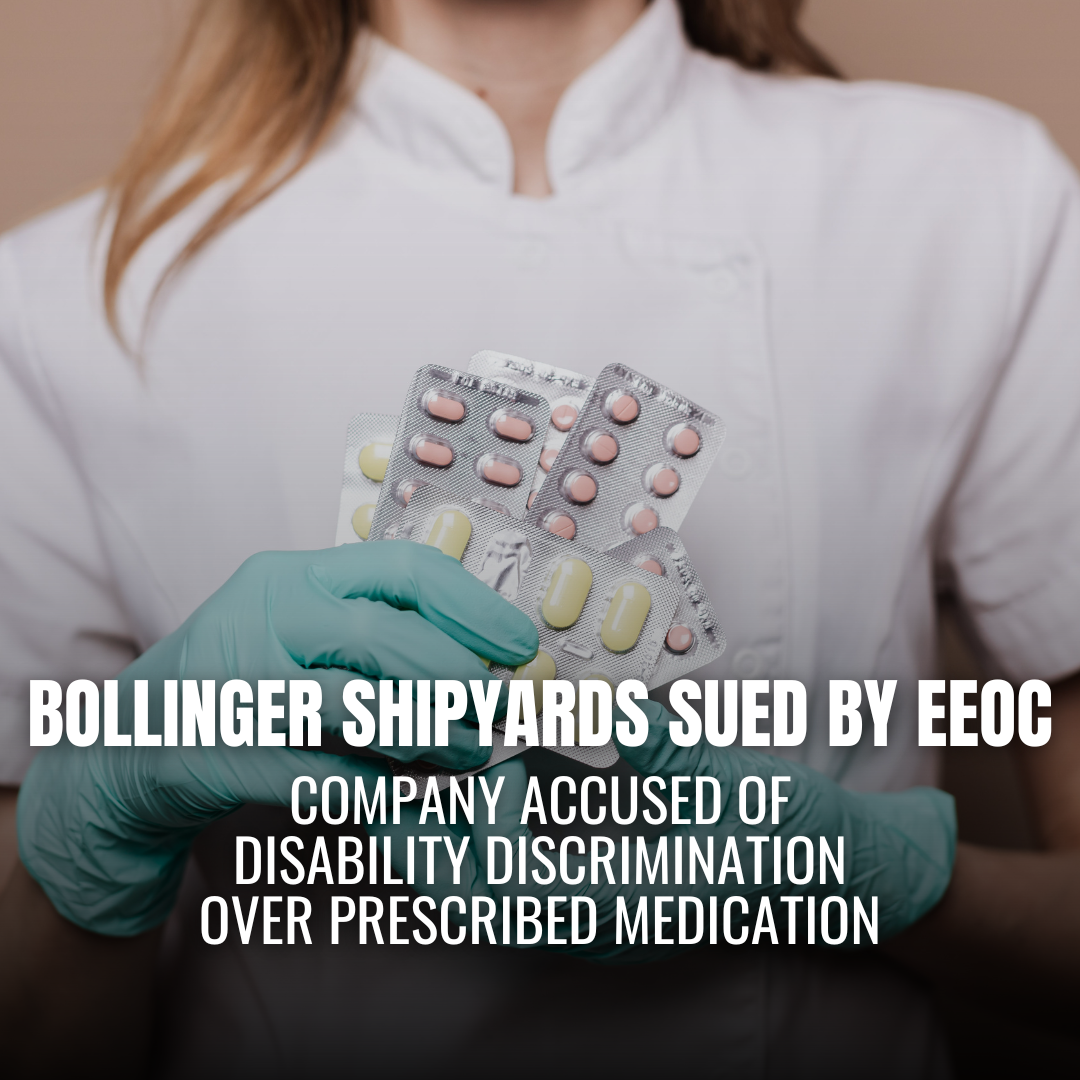
Bollinger Shipyards, LLC, a major marine construction and repair company operating multiple shipyards across Mississippi and Louisiana, is facing a federal disability discrimination lawsuit filed by the U.S. Equal Employment Opportunity Commission (EEOC). The case stems from the company’s decision to place an employee on unpaid leave after learning she was using a legally prescribed medication to treat opioid dependency.
Incident Details
In April 2024, a shipfitter at Bollinger’s Pascagoula, Mississippi facility was placed on involuntary indefinite unpaid leave. The decision came after the company discovered she was undergoing treatment for opioid dependency under a doctor’s supervision. According to the EEOC’s complaint, the employee had consistently performed her job safely and competently prior to being removed from duty.
The lawsuit alleges that Bollinger excluded the employee solely based on her prescribed use of medication-assisted treatment, despite her ability to perform essential job duties without posing a safety risk. This action, the EEOC contends, amounted to unlawful disability discrimination under federal law.
Legal Background
The Americans with Disabilities Act (ADA) protects employees from discrimination based on real or perceived disabilities, including those in recovery from substance use disorders who use medication prescribed by licensed medical professionals.
Under the ADA, employers cannot remove or penalize workers for lawful medical treatment unless there is clear evidence that the employee’s condition poses a direct threat to health or safety that cannot be mitigated through reasonable accommodation. The law also prohibits decisions based on stereotypes, assumptions, or stigma surrounding disability or addiction recovery.
Relief and Settlement Sought
The EEOC filed the lawsuit in the U.S. District Court for the Southern District of Mississippi (EEOC v. Bollinger Shipyards, LLC, Civil Action No. 1:25-cv-00288) after failing to resolve the issue through pre-litigation conciliation.
The agency seeks:
- Back pay for lost wages during the period of unpaid leave.
- Compensatory and punitive damages for the emotional and financial harm suffered.
- Injunctive relief, including policy changes and training to prevent future disability discrimination at Bollinger’s facilities.
Key Takeaways
- Disability discrimination includes treatment-related bias — Employees receiving lawful medical treatment for addiction are protected under the ADA.
- Employers must base decisions on evidence, not assumptions — Medical documentation and safety assessments must guide employment actions.
- Proactive compliance prevents liability — ADA training and updated workplace policies are crucial to avoid similar lawsuits.
Conclusion
The case against Bollinger Shipyards highlights the ongoing challenges workers face when employers misunderstand the ADA’s protections for individuals in recovery. It underscores the legal obligation of companies to evaluate employees based on performance and safety—not stigma. As the EEOC seeks both monetary and policy remedies, the outcome of this case may serve as a reminder to other employers to ensure compliance with disability accommodation laws and uphold fair employment practices.