Norfolk Employment Discrimination
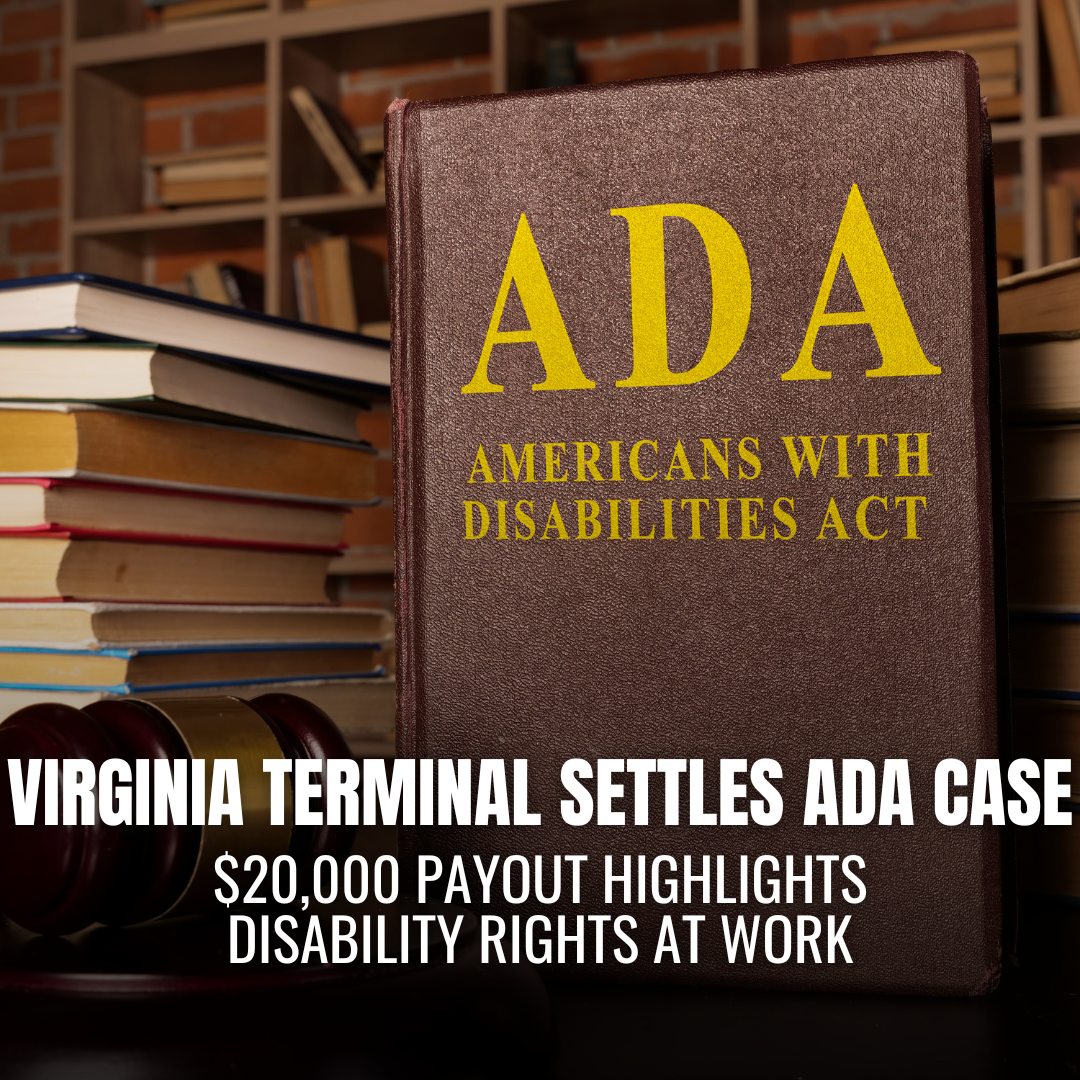
Virginia International Terminals Settles EEOC Lawsuit Over Disability Discrimination for $20,000
Background
Virginia International Terminals, LLC (VIT), a major marine terminal operator based in Norfolk, Virginia, has agreed to pay $20,000 to resolve a disability discrimination lawsuit filed by the U.S. Equal Employment Opportunity Commission (EEOC). The case arose after the company allegedly refused to reinstate an employee recovering from a heart-related medical procedure, despite his medical clearance to return to work.
Incident Details
The lawsuit involved an employee who worked as a hustler truck driver at the Norfolk International Terminals—responsible for moving shipping containers around the facility at low speeds. After suffering a cardiac event, the employee underwent a procedure to receive an implantable cardioverter defibrillator (ICD).
Although the employee’s doctor cleared him to return to his previous position, VIT denied his reinstatement as a hustler driver. Instead, the company reassigned him to lower-paying work, citing potential safety concerns. The EEOC alleged that VIT made this decision without conducting an individualized assessment to determine whether the employee truly posed a safety risk or could perform his duties with reasonable accommodation.
Legal Background
The Americans with Disabilities Act (ADA) prohibits employers from discriminating against qualified employees with disabilities. Under the ADA, an employer must base employment decisions on objective, individualized assessments rather than assumptions or stereotypes about an employee’s medical condition.
The law allows an employer to consider safety concerns only if an employee poses a “direct threat” — a significant risk of substantial harm that cannot be eliminated or reduced through reasonable accommodation. In this case, the EEOC argued that VIT failed to meet this requirement and instead relied on unsupported assumptions about the employee’s medical condition.
Settlement and Relief
The consent decree resolving the lawsuit requires VIT to:
- Pay $20,000 in monetary relief to the affected employee.
- Update its employment and disability accommodation policies to ensure ADA compliance.
- Conduct mandatory ADA training for management and human resources staff.
- Post workplace notices informing employees of their rights under federal anti-discrimination laws.
- Submit periodic compliance reports to the EEOC for three years.
Key Takeaways
- Medical clearance matters — Employers must respect valid medical certifications and not substitute assumptions for professional judgment.
- Individualized assessments are required — Safety-based employment decisions must be based on evidence, not generalizations.
- Policy training prevents violations — Regular ADA training helps employers make informed and lawful employment decisions.
Conclusion
The settlement between VIT and the EEOC underscores the importance of adhering to ADA standards when handling employees with medical conditions. Employers are required to base their decisions on objective medical evidence, not presumptions about health or ability. The case serves as a reminder that fair evaluation and reasonable accommodation are not just legal obligations but essential steps in maintaining equitable workplaces.